

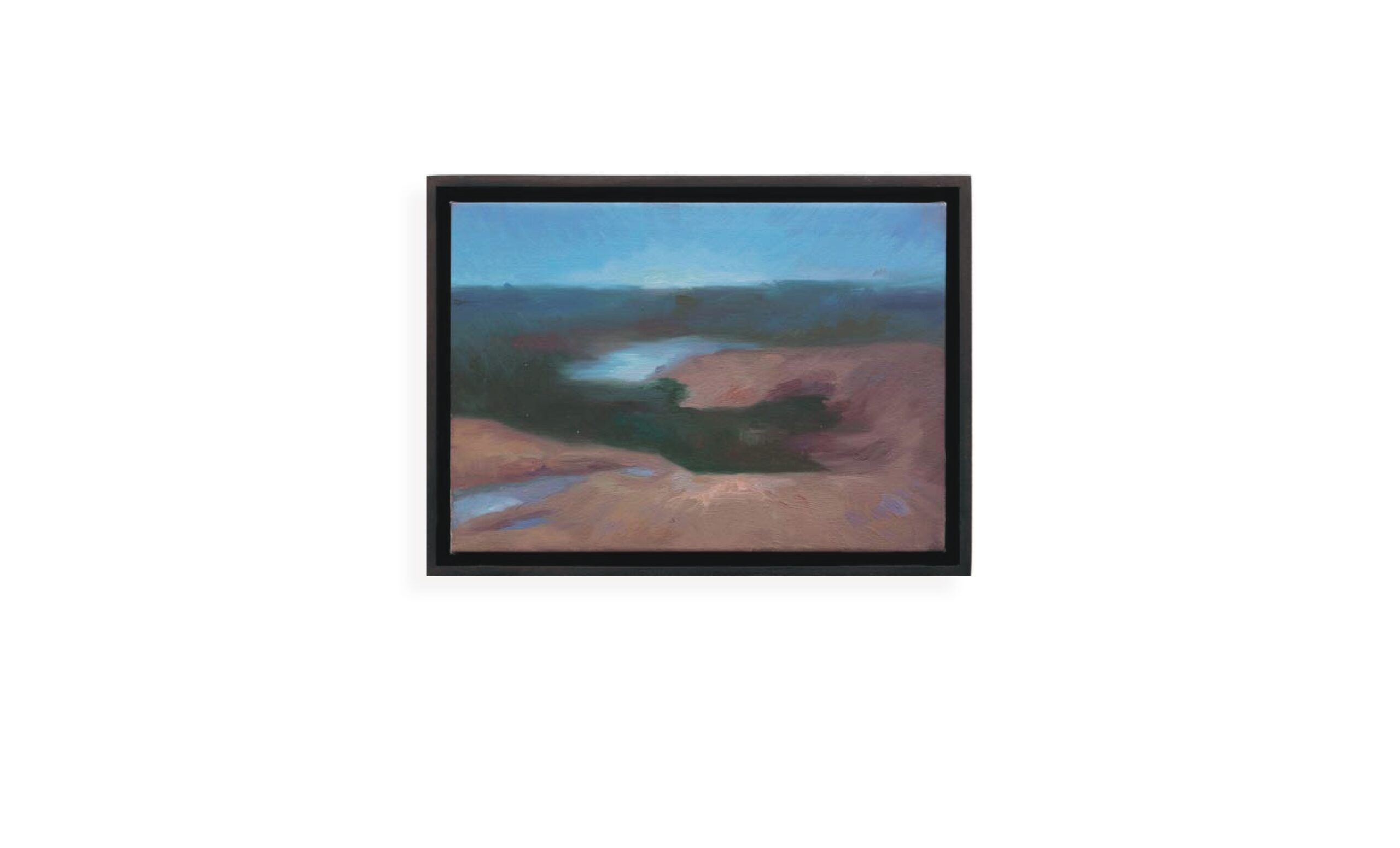
“I keep coming back here, I don’t know why” stages return as both symptom and method. An inquiry into contemporary approaches to the indigenous, the exhibition does not simply gather works about memory or history; it arranges a field in which time behaves erratically, inheritance leaks, and personal recollection collides with structural violence.
Rather than privileging the written archive or the official photograph, the show foregrounds embodied recollections, witnessed spiritual practices, oral testimonies, affect, and silence as forms of documentation. In this sense, I keep coming back here, I don’t know why is less about the past and more about the technologies by which the past persists.
Inheritance appears not as a clean lineage but as something fractured, ambivalent, and at times corrosive. In Kamva Matuis’ enigmatic still lifes we see emblems of how material and symbolic legacies arrive already damaged. The still life becomes a quiet indictment of the idea that to inherit is to receive intact; the works invite audiences to approach inheritance as a task needing repair, reinterpretation, or refusal.
A parallel meditation focuses on matrilineal inheritances as arboreal—networks of roots and branches rather than a single bloodline. In being painted, the family photograph becomes a site of translation where idiom, gesture, and environment rehearse alternative forms of biography.
These works make clear that memory is not a neutral storehouse but an active medium that transfers fragments across time.
Transference—the displacement of feelings from one context onto another—haunts the exhibition. Archival imagery resurfaces in Russel Hlongwane and Tammy Langtry’s UMqombothi, uBhokweni neJuba, where apartheid-era legislation around sorghum beer is not distant history but a lingering structure whose gendered and economic effects seep into the present. Their short film, iGama Lami uPhumzile wakwaNkosi! (1959-2023), juxtaposes found footage with testimony, exposing the disjuncture between what the visual archive preserves and what lived experience remembers. Testimony here is not a supplement to the archive; it is a corrective, revealing how women’s roles in the 1959 Beer Hall Boycotts have been occluded by official memory.
Attending to the limits of language, Mankebe Seakgoe and Balekane Legoabe treat mark-making as a code that exceeds conventional textual systems. Seakgoe’s reflections on silence and sound unfold across painting and sculpture as intuitive, poetic forms that register frequencies that cannot be easily verbalised, reminding us that not all inheritances arrive as words.
Memories attached to particular sites can themselves become monuments, departing from conventional monumentality’s fixed objects and sanctioned narratives. Makoba’s monument is durational, vulnerable, and partially invisible, experienced in the body and through digital mediation. In a context marked by contested statues and persistent spatial injustice, the monument is reinvented as a fleeting alignment of song, walk, camera, and grass.
Across the exhibition, returning is not comfortable. To keep “coming back here” is to confront unhealed wounds, unresolved inheritances, and the stubborn presence of colonial and apartheid structures in the present. The show refuses both nostalgia and easy catharsis, offering a non-linear ethics of return: to revisit is to re-read, reconfigure, and sometimes refuse the narratives and forms that have shaped us.
By staging inheritance as both burden and resource, memory as both fragile and insurgent, and time as both cyclical and unpredictable, “I keep coming back here, I don’t know why” makes an unlimited past feel less like an abstract proposition and more like a lived, complicated condition.