

It is not necessary to rehearse the bad news. Anyone paying even passing attention to contemporary art over the last year will have encountered some version of it. Galleries have closed. Others have scaled down. Institutions are operating under increasing pressure. Across the world, cultural workers are navigating a landscape characterised by uncertainty rather than stability.
One recent report published by Artnet in collaboration with the Association of Women in the Arts (AWITA), drawing on responses from more than 2,000 mid-career women working across the arts, found that nearly half of respondents were considering leaving the sector within the next five years. While the realities facing cultural workers vary across regions and disciplines, the report captures a broader sentiment that feels difficult to ignore. Contemporary art is experiencing a moment of contraction.
Closer to home, audiences have witnessed shifts in the gallery landscape that have prompted similar questions. What happens when a gallery closes? What disappears alongside the exhibitions, openings and announcements? What role do galleries actually play within the contemporary art ecosystem?
The answers are not always obvious.
Part of the challenge is that conversations about galleries often become trapped between two opposing positions. On one side are those who view the gallery as an outdated model struggling to remain relevant in an increasingly digital world. On the other are those who speak about galleries with a kind of nostalgia, as though their value lies simply in their physical existence.
Neither position feels particularly useful.
The argument for galleries is not an argument against digital platforms, artist-run initiatives or independent modes of practice. Contemporary art has always exceeded any single model. Artists have consistently built communities, audiences and careers beyond traditional structures. Nor is this an attempt to excuse unethical practices, exclusionary behaviour or gatekeeping where they exist.
Rather, it is an attempt to think about what galleries do.
One of the stranger assumptions of the digital age is that increased access to images has diminished the importance of physical encounters. Contemporary art has never been more visible. Artworks circulate across social media feeds, websites, newsletters and online viewing rooms at a speed unimaginable only a few decades ago. Yet visibility and encounter are not the same thing.
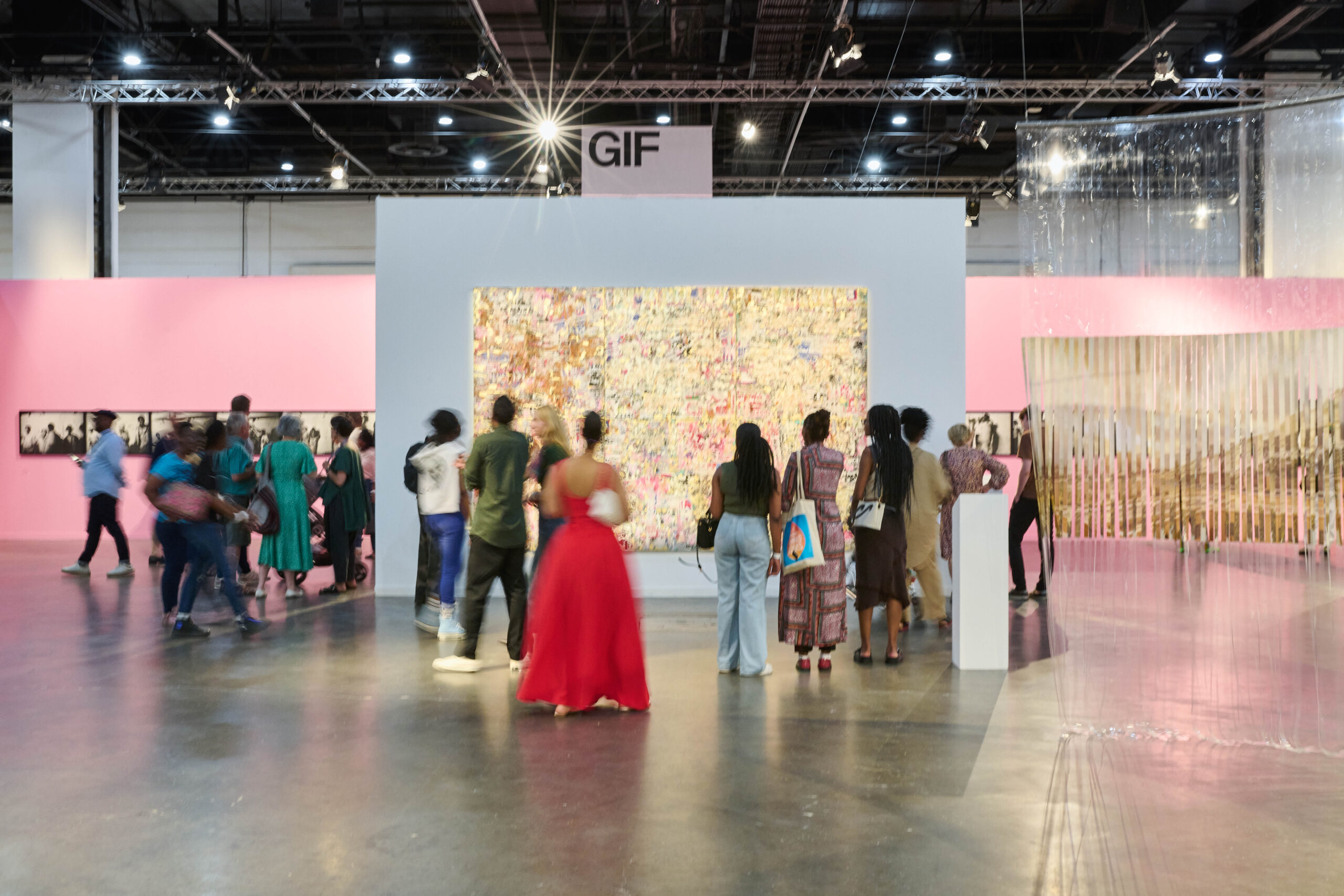
A gallery remains one of the few places where contemporary art can be experienced collectively. It is where an artist, collector, curator, writer, student and first-time visitor might find themselves standing in front of the same work. In a cultural landscape increasingly shaped by personalised algorithms and fragmented audiences, this shared encounter feels significant.
Perhaps this is why I keep returning to the idea of the gallery as a kind of third space.
The term is not perfect. The perception of galleries as elite or intimidating spaces did not emerge from nowhere. Contemporary art continues to grapple with questions of accessibility, exclusion and belonging. These concerns should not be dismissed in any conversation about the future of galleries.
Yet many galleries perform a public function that often goes unnoticed. They remain among the few spaces where people can encounter contemporary art free of charge. Unlike museums, which can require admission fees, galleries often operate with remarkably low barriers to entry. One does not need to be a collector to enter a gallery. One does not need specialist knowledge. One does not even need to intend to stay.
The simple act of walking into a gallery remains an important form of public access to contemporary art.
This role becomes even more important when we consider how audiences come to understand contemporary art in the first place.
Contemporary art can be difficult to navigate, particularly for new audiences. Galleries often serve as points of orientation. They introduce visitors to artists they may never have encountered otherwise. They place practices in conversation with one another. They commission texts, host talks, facilitate studio visits and produce forms of research that help contextualise artistic practices for audiences.
In this sense, galleries do more than exhibit work. They participate in the production of knowledge around it.
The gallerists who run these spaces often act as cultural editors, organising an overwhelming flow of visual production into meaningful narratives. This role is easily overlooked because it frequently takes place behind the scenes. Yet it shapes how audiences encounter artists, how practices are historicised and how conversations develop around particular bodies of work.
Consider the role galleries have played in supporting the careers of living artists. Long before museum retrospectives and institutional recognition, galleries often provide the infrastructure that allows practices to grow. They facilitate relationships between artists and collectors. They connect artists with curators, researchers and writers. They generate interest around bodies of work and create opportunities for practices to be seen, discussed and supported.
This is particularly important in contemporary art because so much of the ecosystem revolves around living artists. Museums frequently tell us about artists once history has already validated them. Galleries participate in that process while it is still unfolding.
Of course, not every gallery fulfils these functions equally well. Some do so more successfully than others. Some have reimagined what a gallery can be, while others remain attached to models that no longer serve artists or audiences. The point is not that galleries are inherently good. It is that they occupy a specific position within the ecosystem.
When a gallery disappears, we lose more than a venue for exhibitions. We lose a site of encounter. A place where relationships are formed. A space where artists are introduced to new audiences. A point of access for those trying to understand contemporary art. A producer of research, dialogue and context.
The future of contemporary art will undoubtedly continue to include artist-run initiatives, digital platforms, independent practices and new forms of cultural organisation. It should. Healthy ecosystems depend on plurality rather than uniformity.
But if recent years have encouraged us to think more carefully about the structures that sustain contemporary art, then galleries deserve to be part of that conversation. Not because they are beyond criticism. Not because they are the only model worth preserving. But because they remain one of the places where art, audiences and discourse continue to meet.
In a moment defined by fragmentation, that feels worth paying attention to.
The future of contemporary art will undoubtedly continue to include artist-run initiatives, digital platforms, independent practices and new forms of cultural organisation. It should. Healthy ecosystems depend on plurality rather than uniformity.
But if recent years have encouraged us to think more carefully about the structures that sustain contemporary art, then galleries deserve to be part of that conversation. Not because they are beyond criticism. Not because they are the only model worth preserving. But because they continue to perform forms of cultural labour that are difficult to replace elsewhere. They introduce artists to audiences. They cultivate relationships. They produce context, scholarship and dialogue. They create opportunities for encounters.
Perhaps that is what I find myself returning to most. In a moment where contemporary art can often feel dispersed across platforms, cities and screens, galleries remain one of the places where the ecosystem becomes visible to itself. They are where artists encounter audiences, where collectors encounter ideas, where writers encounter practices and where curious visitors encounter contemporary art for the first time.
They are, quite simply, some of the places where we see each other.
And in a cultural landscape increasingly defined by fragmentation, that feels worth paying attention to.